Showing posts with label lead. Show all posts

Saturday, December 9, 2023

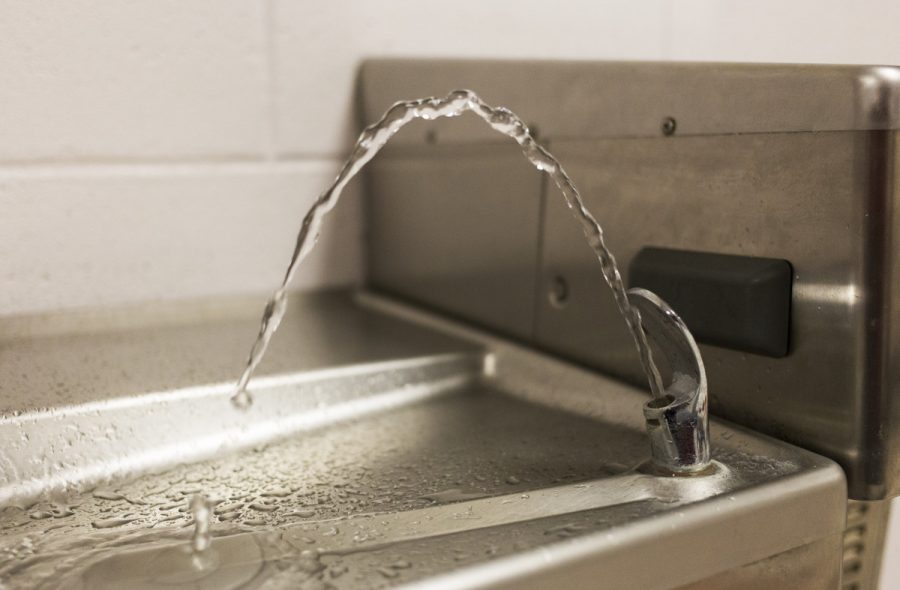
Prince George's County parents want public schools to supply more safe water fountains


PRINCE GEORGE'S COUNTY, Md. (7News) — 7News wants to know why it's taken Prince George's County Public Schools 19 years to supply safe, lead-free, and filtered water at fountains on each floor of its schools.

"This is a chronic problem. They started a lead remediating program in 2004 and they said they had finished all their steps in their strategic plan in 2018 - and here we are in 2023 and the schools do not have filtered water," says Christina Toy who has a student attending classes.

Since 2019, every school has been provided at least one filtered water fountain with a bottle fill, district officials told 7News. That's at least one filtered water fountain at each of its 200 schools with roughly 131,600 thirsty students combined...

Prince George's County parents want public schools to supply more safe water fountains | WJLA

Friday, February 17, 2023

DC playground closed due to lead contamination


DCPS closed the playground at Parkview Rec Center near Bruce-Monroe Elementary after elevated levels of lead were found in tests of runoff water.

WASHINGTON — A D.C. rec center playground used by a nearby elementary school was closed Thursday after elevated levels of lead were discovered. 

In an email, DC Public Schools alerted parents that one of the playgrounds at Parkview Rec Center tested high for lead and it had been closed. The playground, attached to Bruce-Monroe Elementary School, sits on rubber mats...

Thursday, December 2, 2021

Where are America’s lead pipes?

Despite the danger posed by contaminated water, many states have no idea

From The Economist. Full story here.


But the federal government did not fully ban the installation of new lead pipes until 1986. Even then it allowed existing pipes to remain in the ground. The trouble is, no one is sure where they all are.

The Environmental Protection Agency estimates that there are between 6m and 10m lead service lines in America but does not publish a breakdown of where. In 2018 it requested, for the first time, that all states report by 2022 on the quantity of lead pipes still in use. Efforts by another organisation to collect this data show how difficult this is. Earlier this year the National Resources Defense Council (NRDC), an environmental charity, asked states to provide estimates for their lead pipes. Just ten states and the District of Columbia were able to provide full estimates. Another 23 states said they did not track the number of lead pipes. Three were in the middle of surveys. The rest failed to respond or submitted incomplete data. (Using supplementary data from a 2016 survey by the American Water Works Association, an industry body, the NRDC estimates that there are between 9.7m and 12.8m lead pipes in America serving as many as 22m people.)

Wednesday, December 1, 2021

New lead testing method could reveal higher levels in water

 From the AP, reporter Michael Phillis. Full story here.

After the Flint water crisis, Michigan passed the country’s most aggressive lead measures, including more stringent testing of water. When using methods similar to what is currently required by the Environmental Protection Agency, testing of 170 systems in Michigan with lead lines resulted in 11 samples that exceeded the federal lead level requiring corrective action. When using another method like the one the EPA is reviewing and could soon mandate nationally, the figure doubled to 22.

With an even more thorough testing method Michigan adopted, it climbed to 31.

Other states are likely to see more elevated lead results as well under new testing; lead pipes still deliver water to millions of homes and businesses, a relic of the country’s outdated infrastructure.

“We should expect to see a very large number of utilities that are in compliance with the current rule no longer being in compliance,” said Daniel E. Giammar, an environmental engineering expert at Washington University in St. Louis.

Testing for lead involves turning on the tap and collecting a sample. Currently, federal regulations require sampling the first liter of water out of the tap. The new rule under review would leave the tap on longer to collect the fifth liter. Instead of water sitting near the faucet, the change is intended to test water that sits in the lead service lines that connect buildings to water mains.

And:

The Centers for Disease Control and Prevention says no amount of lead in drinking water is considered safe. Young children are especially vulnerable since exposure can slow their cognitive development and cause other health problems. Elin Warn Betanzo of Safe Water Engineering, a consulting firm, said water systems may have limited information on safety because of their sampling methods.

“They’ve used the absence of data to back up their statements that the water is safe,” she said.


Monday, April 12, 2021

There are 11 macro cell towers on MCPS campuses. 81% of them are at schools where at least one-third of students receive free and reduced meals (FARMs).


Text of public comment by Lisa Cline on Montgomery County Public Schools Operating Budget April 2021.

 Hello. My name is Lisa Cline. I live in Gaithersburg, am an MCPS parent and child safety advocate. Thank you all for your incredible work keeping the County safe this past year. I for one am thankful for the hard decisions you’ve had to make. On that note, my testimony has to do with the safety of MCPS students and allocation of funds in the 2022 fiscal budget to test for an air quality issue that has gone largely ignored for 20 years. That is: radio frequency emissions. There are 11 macro cell towers on MCPS campuses. 81% of them are at schools where at least one-third of students receive free and reduced meals (FARMs). To put that in perspective, at a high school where 5% of students are in financial need, a cell tower was successful fought. So our poorer communities are disproportionately subject to the possible health risks of RF emissions. Does this bother anyone else? In 2004, it bothered the Montgomery County Planning Board. In 2004, a mandatory referral letter from the then-Planning Board Chair pertaining to a tower application (200411-04) at Northwood HS indicated approval of the tower with the condition that “a letter certifying [it] operates within FCC standards is provided on an annual basis to MCPS.” Last August, I began working with MCPS Real Estate lead Boyd Lawrence to obtain those annual certifications. Mr. Lawrence also serves as a member of the Montgomery County Tower Committee. He was unsuccessful getting any RF reports and directed me to file an MPIA request, which I did. The request yielded just three reports over a 20-year span. Not one tested aggregate emissions, one mis-named Wheaton as “Wharton,” one only tested the perimeter of the school, and none measured inside the schools…where it matters most. RF radiation is a possible carcinogen. So is radon and lead. So let’s talk about radon and lead. MCPS has been testing for radon since the late ‘80s on a five- year cycle; every two years at schools with a past problem. Regarding lead…all schools must be tested every three years for compliance with EPA recommended levels of 20 ppb. But that wasn’t good enough for many of you…who then passed legislation lowering the action level to 5 ppb. Let me underscore that there is NO RF testing in our schools. I hope you see the double standard here, appreciate the importance of this request and will allocate funding for annual RF testing at all of our cell tower-hosting schools.

Sunday, May 5, 2019

Playing in poison? 7 On Your Side discovers dangerous lead levels at a local playground

A local elementary school playground saturated with lead. 7 On Your Side uncovers why lead levels are dangerously high, what's being done to fix the problem, and whether other area school children are playing in poison. Monday at 6 p.m. on ABC7 News.

https://wjla.com/features/7-on-your-side/dangerous-lead-levels-dc-playground

Thursday, August 16, 2018

MCPS Review Reveals Elevated Lead Levels in Water at 86 Schools

...In 2017, the Maryland General Assembly passed a bill requiring periodic testing for the presence of lead in each drinking water outlet located in all schools.
The law required all initial testing to be done by July 1.
Montgomery County Public Schools tested 13,248 outlets at 208 school sites. About 1.8 percent of the outlets showed lead levels over 20 parts per billion, a guideline for lead levels set by the U.S. Environmental Protection Agency and specified in the state law. About 1.1 percent of the water stations with high-lead levels were accessible to students.
A Bethesda Beat analysis of the test reports posted by the school system found that at least 59 drinking fountains, identified in the reports as bubblers, showed high lead levels.
At Flower Hill Elementary School in Gaithersburg, seven of nine high-lead level readings were at drinking fountains. Initial tests captured levels of lead between 31.5 parts per billion and 151 parts per billion. Cold Spring Elementary School in Potomac had five drinking fountains with high-lead levels in initial tests, with readings between 24.2 parts per billion and 79.1 parts per billion.
The highest lead level captured during the testing was 700 parts per billion in water from a kitchen faucet at Albert Einstein High School in Kensington; that reading decreased to 1.3 parts per billion during a follow-up test...

Sunday, June 17, 2018

Drinking water exceeds lead limits at 63 Montgomery Co. schools

From WTOP, reporter Megan Cloherty. Full story here.

WASHINGTON — Summer break is now in full swing for students in Montgomery County, but county drinking water testing reports show kids who attended more than 60 schools in the system could have been exposed to dangers levels of lead.

In updating the results of its ongoing Drinking Water Testing Program, Montgomery County schools say drinking outlets at 150 schools in its system have been tested for lead. Many have already been fixed.

While the county says on its website only 97 of the 9,748 outlets tested are accessible to students, a closer look at the individual school reports finds that a majority of the offending outlets are in elementary schools’ classrooms.

The Environmental Protection Agency sets a threshold of 20 parts per billion for the lead in drinking water before the fixture needs to be replaced. Nearby school systems like D.C. won’t let lead exceed 5 parts per billion.In Prince George’s County Schools, it’s 10 parts per billion, or ppb.

Of the 94 Montgomery County elementary schools tested, 46 have at least one drinking outlet that tested above the EPA threshold. Four others come within 1 part of the 20 ppb threshold. See the county’s testing reports by school here.

Some faucets and bubblers, or drinking fountains, tested at a few schools far exceeded 20 ppb, according to county data:
  • A classroom bubbler at Lucy V. Barnsley Elementary School in Silver Spring, Maryland, tested 356ppb.
  • A faucet in an ESOL classroom in Farmland Elementary School in Rockville, Maryland, tested at 564 ppb.
  • A faucet in computer lab inside Fields Road Elementary School in Gaithersburg, Maryland, tested at 259 ppb.
  • A bubbler in Gaithersburg Elementary tested at 253 ppb.
  • A faucet tested at 310 ppb in a Maryvale Elementary School classroom in Rockville, Maryland.
  • A classroom faucet at South Lake Elementary School in Gaithersburg, Maryland, tested at 431 ppb.
  • At Eastern Middle School in Silver Spring, Maryland, a classroom faucet tested 115 ppb.
  • In Kensington, Maryland, a kitchen faucet at Einstein High School tested at 700 ppb.
  • At Wooton High School in Rockville, Maryland, a faucet inside a computer lab room tested at 112 ppb.

Wednesday, June 6, 2018

MCPS: Do Not Drink the Water - Blair High School

Built in 1998, in Montgomery County, Maryland, Montgomery Blair High School has the following signs in the restrooms.


MCPS: Do Not Drink the Water - Gaithersburg High School

Built in 2011, Gaithersburg High School in Montgomery County, Maryland has these signs above the restroom sinks.


Thursday, May 3, 2018

Today: KID Museum spokesperson is Emma Starr, Museum wants $5.93 Million from County

Today at the Montgomery County Council the KID Museum in Bethesda will be asking for over $5 million from Montgomery County's budget.  The packet for today's meeting is shown below.  Former superintendent Joshua Starr's wife is the spokesperson for the museum.  Here is what she had to say about the request.    
...But the nonprofit has outgrown the space, KID Museum spokeswoman Emma Starr said. The museum is currently serving 55,000 people each year at the library, but would like to increase that total to 250,000, she said.
“Right now, we are excited about the proposed partnership,” Starr said, adding the county and Montgomery County Public Schools are supportive of the museum’s mission. “We like to say that we have a shared vision of what’s important in innovation, education and diversity. We share this vision of bringing impactful learning experiences to kids.”
http://www.bethesdamagazine.com/Bethesda-Beat/2018/County-City-of-Rockville-Mull-Plan-To-Buy-Office-Building-as-New-Home-for-KID-Museum/

Fortunately, Montgomery County is flush with cash and our public schools are not in need of any funding.  We can spend money on a museum (is it a museum?).  Too bad there aren't any free (actual) museums in D.C. for public school students to visit.  

Tuesday, May 1, 2018

#Breaking: Prince George’s County School’s CEO Kevin Maxwell tells News4 he is preparing to leave the school system at the end of the school year. In our exclusive interview, he calls it a “transition.” Our story at 4, 5 and 6.


Wednesday, April 18, 2018

Brain-damaging lead found in tap water in hundreds of homes tested across Chicago, results show

A Tribune analysis of the results shows lead was found in water drawn from nearly 70 percent of the 2,797 homes tested during the past two years. Tap water in 3 of every 10 homes sampled had lead concentrations above 5 parts per billion, the maximum allowed in bottled water by the U.S. Food and Drug Administration...

...Lead is unsafe to consume at any level, according to the EPA and the U.S. Centers for Disease Control and Prevention. Ingesting tiny concentrations can permanently damage the developing brains of children and contribute to heart disease, kidney failure and other health problems later in life. A peer-reviewed study published last month in The Lancet, a London-based medical journal, estimated that more than 400,000 deaths a year in the U.S. are linked to lead exposure — or 18 percent of all deaths.
There is no federal standard for the amount of lead found in tap water at individual homes, but studies have reported harmful effects when concentrations exceed the FDA’s standard for bottled water. In a recent peer-reviewed study, EPA scientists cautioned that when children under age 7 drink water containing more than 5 ppb of lead on average, the amount of the metal in their blood can rise above CDC health guidelines...
...“Chicago’s testing blows out of the water one of the foundations of (federal regulations), namely that current lead-in-water monitoring requirements yield reliable information about the extent and severity of contamination across a service area,” Lambrinidou said...

Monday, March 19, 2018

2015: Rockville HS Student Exposed that Water from fountains had lead amounts that surpassed the EPA action level


H20 or H2No? Rusty, Discolored Water Has Concerning Lead Levels

Xavier+Rivera
Xavier Rivera
Hundreds of students drink from school water fountains, unaware of the quality of the water that they are putting into their bodies – not knowing whether or not they are consuming is rusty, lead-filled water.
Samples were collected from 24 RHS water fountains at 10:45 a.m. on Jan. 26. Seven of them had a visibly yellow tint to them with floating solids in the water and settled solids at the bottom of the sample container. Samples were sent to Sheppard T. Powell Associates, LLC labs.
Water from fountains next to rooms 1020, 1039, 1101, and 2065 had lead amounts that surpassed the EPA action level of 0.015 ppm.
According to the World Health Organization, lead can damage the nervous and reproductive systems and the kidneys, and is especially unsafe for young children and pregnant women.
Jim Roenick, a water treatment contractor and chemist for Georgetown University, helped process and interpret the samples. He explained that the yellow tint usually comes from suspended metals in the water (iron, copper and/or other metals). “Whether it’s a copper pipe or a steel pipe, it’s going to corrode. So now, when you turn the water fountain on, you get those products in the water,” Roenick said...

Friday, March 16, 2018

WTOP: Elevated lead levels found in water at 12 of 21 Montgomery Co. schools tested so far

WASHINGTON — More than half the Montgomery County schools tested so far have shown elevated levels of lead in their drinking water.
The district has released results from the first batch of tests of the 205 schools in the county, and so far 12 of the first 21 schools tested have been shown to have lead levels higher than the 20 parts per billion mandated by the Environmental Protection Agency.
Eight of the 12 offending schools are elementary schools: Gaithersburg, New Hampshire Estates, Pine Crest, Rock View, Rolling Terrace, Strathmore, Summit Hall and Viers Mill. Other schools found to have high lead levels so far are Eastern Parkland and Sligo middle schools, and Northwood High School...
...Neighboring school districts have more stringent standards. Prince George’s County set its lead standard at 10 parts per billion; in D.C. schools the standard is 5 parts per billion...

Tuesday, November 14, 2017

Where is MCPS Data on Lead in Water? 7 On Your Side: Tapped with trouble

Do you have any idea if the water at your child's school is safe to drink?
7 On Your Side did some digging and the I-Team has discovered some alarming results.

http://wjla.com/features/7-on-your-side/7-on-your-side-tapped-with-trouble

Tuesday, March 21, 2017

88 PG public schools exceeded EPA allowable lead levels #lead

After the story of the Flint Michigan water crisis unfolded in the media last year, I read a news story reporting that lead had been found in the water at Ardmore Elementary School and that water fountains and sinks had been turned off. I became curious. Was the drinking water in our county schools safe?
So in January of 2016 I decided to write to PGCPS CEO Dr. Maxwell and began a long inquiry asking what tests had been done in Prince George’s County Schools to measure for lead. Here is what I learned:

The school system performed water tests from 2009 to 2012 and found that at least 88 schools exceeded EPA allowable lead levels. (Read the list of “Prince George’s County Public Schools Fixtures that are Valved Off” which was sent to me from PGCPS). The majority of  schools with lead contamination are elementary schools.
As of December 2016, the school system had not done anything to remediate this other than simply to turn off faucets in the majority of these schools.
At first, PGCPS told me that they were fixing the lead problem. I was sent a document titled “PGCPS Lead in Water Program” that explained a four-phase plan to fix the lead problem. This document said that a Request for Proposals (RFP) had been submitted “to remediate the remaining classroom water fountains and sinks throughout the system.” This was “Phase Four” of the plan.
You can imagine my surprise to learn that in fact the information PGCPS had sent me was not accurate. When I asked PGCPS to share the details of the “Phase Four” plan, they responded on October 7, 2016 with an email saying that they had made a mistake...

https://pgcabs.org/2017/03/10/what-i-learned-about-lead-in-the-water-in-prince-georges-county-schools/