Showing posts with label lead levels. Show all posts

Saturday, December 9, 2023

Prince George's County parents want public schools to supply more safe water fountains


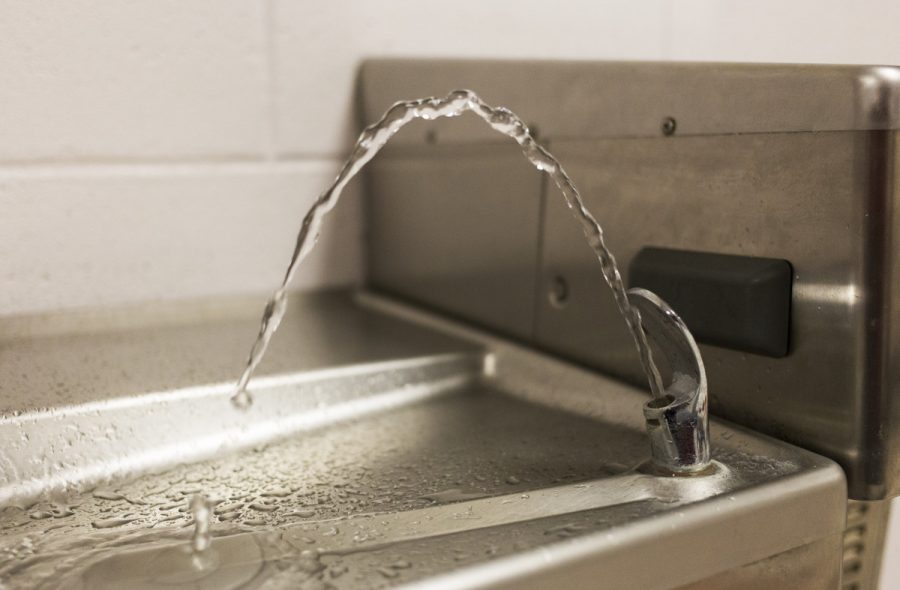
PRINCE GEORGE'S COUNTY, Md. (7News) — 7News wants to know why it's taken Prince George's County Public Schools 19 years to supply safe, lead-free, and filtered water at fountains on each floor of its schools.

"This is a chronic problem. They started a lead remediating program in 2004 and they said they had finished all their steps in their strategic plan in 2018 - and here we are in 2023 and the schools do not have filtered water," says Christina Toy who has a student attending classes.

Since 2019, every school has been provided at least one filtered water fountain with a bottle fill, district officials told 7News. That's at least one filtered water fountain at each of its 200 schools with roughly 131,600 thirsty students combined...

Prince George's County parents want public schools to supply more safe water fountains | WJLA

Wednesday, December 1, 2021

New lead testing method could reveal higher levels in water

 From the AP, reporter Michael Phillis. Full story here.

After the Flint water crisis, Michigan passed the country’s most aggressive lead measures, including more stringent testing of water. When using methods similar to what is currently required by the Environmental Protection Agency, testing of 170 systems in Michigan with lead lines resulted in 11 samples that exceeded the federal lead level requiring corrective action. When using another method like the one the EPA is reviewing and could soon mandate nationally, the figure doubled to 22.

With an even more thorough testing method Michigan adopted, it climbed to 31.

Other states are likely to see more elevated lead results as well under new testing; lead pipes still deliver water to millions of homes and businesses, a relic of the country’s outdated infrastructure.

“We should expect to see a very large number of utilities that are in compliance with the current rule no longer being in compliance,” said Daniel E. Giammar, an environmental engineering expert at Washington University in St. Louis.

Testing for lead involves turning on the tap and collecting a sample. Currently, federal regulations require sampling the first liter of water out of the tap. The new rule under review would leave the tap on longer to collect the fifth liter. Instead of water sitting near the faucet, the change is intended to test water that sits in the lead service lines that connect buildings to water mains.

And:

The Centers for Disease Control and Prevention says no amount of lead in drinking water is considered safe. Young children are especially vulnerable since exposure can slow their cognitive development and cause other health problems. Elin Warn Betanzo of Safe Water Engineering, a consulting firm, said water systems may have limited information on safety because of their sampling methods.

“They’ve used the absence of data to back up their statements that the water is safe,” she said.


Thursday, July 25, 2019

Playground Lead Levels Forum: Media reports have shown dangerously high lead levels on DC-area playgrounds and playing fields made from synthetic materials

You’re invited to a Community Forum Monday, July 29 at 7 pm!
Recent media reports have shown dangerously high lead levels on DC-area playgrounds and playing fields made from synthetic materials, such as shredded tires. These playgrounds and fields can be dangerously hot, dangerously hard, and made with no fewer than 13 carcinogens. Recent testing shows high levels of lead at several local school playgrounds, including Takoma, Truesdell, and Janney.
Join us for a panel discussion and Q & A on Monday, July 29 at 7 pm with Dr. Alexander Wooten from Morgan State University, Dr. Diana Zuckerman from the National Center for Health Research, and Dr. Jeff Gearhart from the Ecology Center. Details and registration here.
This forum promises to be an enlightening and thought-provoking discussion of importance to the media as well as parents, grandparents, policy makers, and people who care about our environment.
In addition to a broad overview, the panel will answer specific questions regarding the Ecology Center’s recent findings of high lead on the playgrounds at Takoma, Truesdell, and Janney.
The National Center for Health Research is a nonprofit think tank that has scientifically analyzed the evidence regarding artificial turf and playgrounds, and testified before the U.S. Consumer Product Safety Commission, DC legislators, Maryland legislators, and Connecticut legislators.  To learn more, check out our website at www.center4research.org and write “tire” in the search box, to see some of the articles and letters we’ve written on the topic.

Sunday, June 17, 2018

Drinking water exceeds lead limits at 63 Montgomery Co. schools

From WTOP, reporter Megan Cloherty. Full story here.

WASHINGTON — Summer break is now in full swing for students in Montgomery County, but county drinking water testing reports show kids who attended more than 60 schools in the system could have been exposed to dangers levels of lead.

In updating the results of its ongoing Drinking Water Testing Program, Montgomery County schools say drinking outlets at 150 schools in its system have been tested for lead. Many have already been fixed.

While the county says on its website only 97 of the 9,748 outlets tested are accessible to students, a closer look at the individual school reports finds that a majority of the offending outlets are in elementary schools’ classrooms.

The Environmental Protection Agency sets a threshold of 20 parts per billion for the lead in drinking water before the fixture needs to be replaced. Nearby school systems like D.C. won’t let lead exceed 5 parts per billion.In Prince George’s County Schools, it’s 10 parts per billion, or ppb.

Of the 94 Montgomery County elementary schools tested, 46 have at least one drinking outlet that tested above the EPA threshold. Four others come within 1 part of the 20 ppb threshold. See the county’s testing reports by school here.

Some faucets and bubblers, or drinking fountains, tested at a few schools far exceeded 20 ppb, according to county data:
  • A classroom bubbler at Lucy V. Barnsley Elementary School in Silver Spring, Maryland, tested 356ppb.
  • A faucet in an ESOL classroom in Farmland Elementary School in Rockville, Maryland, tested at 564 ppb.
  • A faucet in computer lab inside Fields Road Elementary School in Gaithersburg, Maryland, tested at 259 ppb.
  • A bubbler in Gaithersburg Elementary tested at 253 ppb.
  • A faucet tested at 310 ppb in a Maryvale Elementary School classroom in Rockville, Maryland.
  • A classroom faucet at South Lake Elementary School in Gaithersburg, Maryland, tested at 431 ppb.
  • At Eastern Middle School in Silver Spring, Maryland, a classroom faucet tested 115 ppb.
  • In Kensington, Maryland, a kitchen faucet at Einstein High School tested at 700 ppb.
  • At Wooton High School in Rockville, Maryland, a faucet inside a computer lab room tested at 112 ppb.

Monday, March 19, 2018

2015: Rockville HS Student Exposed that Water from fountains had lead amounts that surpassed the EPA action level


H20 or H2No? Rusty, Discolored Water Has Concerning Lead Levels

Xavier+Rivera
Xavier Rivera
Hundreds of students drink from school water fountains, unaware of the quality of the water that they are putting into their bodies – not knowing whether or not they are consuming is rusty, lead-filled water.
Samples were collected from 24 RHS water fountains at 10:45 a.m. on Jan. 26. Seven of them had a visibly yellow tint to them with floating solids in the water and settled solids at the bottom of the sample container. Samples were sent to Sheppard T. Powell Associates, LLC labs.
Water from fountains next to rooms 1020, 1039, 1101, and 2065 had lead amounts that surpassed the EPA action level of 0.015 ppm.
According to the World Health Organization, lead can damage the nervous and reproductive systems and the kidneys, and is especially unsafe for young children and pregnant women.
Jim Roenick, a water treatment contractor and chemist for Georgetown University, helped process and interpret the samples. He explained that the yellow tint usually comes from suspended metals in the water (iron, copper and/or other metals). “Whether it’s a copper pipe or a steel pipe, it’s going to corrode. So now, when you turn the water fountain on, you get those products in the water,” Roenick said...

Sunday, February 5, 2017

New York Changes How It Tests for Lead in Schools’ Water, and Finds More Metal

From New York Times, Feb 3, reporter Kate Taylor. Full story here.

When experts said last year that New York City’s method of testing water in public schools for lead could hide dangerously high levels of the metal, officials at first dismissed the concerns. They insisted that the city’s practice of running the water for two hours the night before taking samples would not distort results.
Still, the city changed its protocol, and the results from a new round of tests indicate that the experts were right.
So far, the latest tests have found nine times as many water outlets — kitchen sinks, water fountains, classroom faucets or other sources — with lead levels above the Environmental Protection Agency’s “action level” of 15 parts per billion as last year’s tests found, according to a report released by the state health department last week.
And in some schools where the earlier tests detected problems, the lead levels identified by the new tests were much worse.
And:
At Intermediate School 27, the Anning S. Prall School, on Staten Island, a first round of tests, conducted in April 2016 after the water had been allowed to run, a practice known as pre-stagnation flushing, found six outlets with lead levels above the E.P.A. threshold. The highest level was found in water from a classroom faucet, where the lead concentration was 49 parts per billion.

Tuesday, March 29, 2016

Councilmembers Want Test of County (Not MCPS) Artificial Turf Fields for Lead, Chromium, Cadmium and Phthalates

Council Members Call on County to Test Artificial Turf Fields for Toxic Substances:

...A spokesperson for Montgomery Parks couldn’t be reached Tuesday morning. Patrick Lacefield, a spokesperson for Leggett, said he was looking into the county’s response to the testing request.
According to the Parents’ Coalition, a group that bills itself as a watchdog of Montgomery County Public Schools, Parks officials did test its artificial turf fields at Blair High School and Wheaton Regional Park in 2013.
The group recently republished a February 2013 email from Mike Riley, now the director of Montgomery Parks, in which Riley reported the lead content in turf fibers at the Blair High School field was less than could be measured.
Riley also wrote the maximum lead content found in the Wheaton Regional Park field was 8.88 milligrams per every kilogram, “far less than the threshold of 400 [milligrams per every kilogram] established by [Maryland Department of Environment], and less than found in typical eastern U.S. surface soils.”

Tuesday, March 22, 2016

Council's Education Committee Deletes $11 Million in Plastic Grass Cash from MCPS Capital Budget #nobid #perksRus #AlwaysFieldTurf #lead

On Monday, March 21, 2016, the Montgomery County Council's Education Committee met to discuss a number of budget items related to Montgomery County Public Schools.  One of the topics discussed was the Board of Education decision to spend $11 million on plastic grass football fields while the needs of school buildings for repairs and maintenance remains high.

Apparently, the Montgomery County Council's Education Committee finally decided to notice that the Board of Education was once again directing Capital Budget money away from pressing health and safety needs of public school children, and was instead going to spend money on a no-bid luxury item unrelated to closing the achievement gap.

The Council's staff wrote the following statement with regard to the BOE's decision to divert $11 million to plastic grass. 


 http://www.montgomerycountymd.gov/council/Resources/Files/agenda/cm/2016/160321/20160321_ED2-3.pdf

During the Education Committee's meeting, Councilmember Marc Elrich made a motion that the $11 million no-bid perk funding should be deleted from the MCPS budget so that the funds can be used for more pressing Capital needs.  The Education Committee voted 3-0 to support this motion.  This matter will now go before the full Montgomery County Council.


Tuesday, March 15, 2016

FieldTurf: "Yes, there is lead in our products."

The Parents' Coalition has previously reported on the fact that there is lead in the artificial turf that the Board of Education and Montgomery County Parks uses on football and soccer fields.

Lead levels are of no interest to our elected officials, PTAs or parent community and so there has never been any local action to address this fact.  Remember that artificial turf purchases made by the Board of Education are never put out for competitive bids, and there is never any discussion about the content of comparable products.  FieldTurf is the one and only plastic grass that the Board of Education buys. 

There is currently legislation being proposed in Annapolis  (House Bill 883) that would require signs at artificial turf fields based on warnings issued by the CDC.  On March 11, 2016, the Maryland House Ways and Means Committee held a public hearing on this proposed legislation.  A representative from FieldTurf spoke at the public hearing and answered a question about the existence of lead in FieldTurf products.  His answer is shown in the video below.


The Board of Education uses FieldTurf artificial turf at the following high school football fields:
Gaithersburg HS
Walter Johnson HS
Paint Branch HS
Richard Montgomery HS
Wootton HS

The Maryland National Parks and Planning Department uses Field Turf at the Montgomery Blair High School football field.


Sunday, May 31, 2015

Synthetic Turf Can Deteriorate to Form Dust Containing Lead

And here is what the Walter Johnson High School artificial turf field looks like now.  The green plastic blades are deteriorating, shredding and turning into dust that can be inhaled by field users.

This picture shows the plastic grass blades at WJHS. Everything shown in this picture is plastic. The plastic has broken apart as the blades have deteriorated in the sun.


Tuesday, June 18, 2013

Artificial Turf Procurement Work Session at City of Gaithersburg

City of Gaithersburg Work Sesson on Artificial Turf procurement held on June 10, 2013:

Saturday, February 16, 2013

Prince George’s delegates approve artificial-turf fields at county high schools

Let's be clear about what has happened with this Bill.  The PG Delegation voted for this bill because it was changed so that no PG County funds will be used.  Instead of PG paying for their mandated plastic grass fields, we all will be paying.  The money is now going to come from the State of Maryland.  

The Prince George’s County House Delegation on Friday approved a state bill that would require the installation of artificial turf fields at all county high schools, after County Executive Rushern L. Baker III (D) rescinded his opposition to the measure.
The delegates voted 19-3 to approve the bill even though the county Board of Education said this week that it was against the measure...
...Walker’s original bill said county funds could be used to pay for the fields. He amended the bill Friday, allowing state school construction funds and money from the Open Space program, which pays for parks and recreation, to be used pay for the installation.
“Every dollar that is diverted for turf fields from the Board’s Capital Improvement Program deprives Prince George’s County school children from having a leaky roof fixed, a boiler repaired, or a grease trap replaced,” the school board wrote in a letter to the delegates...
Article continues at The Washington Post

Tuesday, February 5, 2013

Council Approves Lead & Zinc Infused Plastic Grass for Wootton High School

As expected, the Montgomery County Council approved the installation of 120 tons of ground up rubber waste and a football sized sheet of plastic grass for the Wootton High School field.

This time, however, there was one dissenter on the Council.  Councilmember Marc Elrich voted against this project.  Councilmember Elrich cited concerns about the known zinc run off from artificial turf fields, known PAH levels that vaporize, lack of storm water testing, and the fact that during the storm last year the University of Maryland moved a game from UM artificial turf to the natural grass field at the Soccer Plex.

The Council did not discuss the continuing failure of MCPS to follow Maryland Education Act Procurement law. As usual, MCPS is not putting out an RFP for this project, is not taking competitive bids, and is grossly overpaying for a product.  In this case, however, the parties getting hosed are a private club and the Wootton parents as this field is not being paid for out of tax revenues.


Monday, February 4, 2013

MCPS Funding Plan for Artificial Turf Fails

Let's go in the way back machine for a moment, back to January of 2008.  Remember this memo from Superintendent Jerry Weast to the Board of Education on how MCPS would pay for all 24 high schools to have artificial turf football fields? The plan was to use rental fees from the Richard Montgomery High School artificial turf field to "help offset costs for artificial turf fields at the other county high schools."
http://www6.montgomerycountymd.gov/content/council/pdf/agenda/cm/2008/080219/20080219_ED03.pdf


Well, here we are in 2013!  And, how much revenue are the 5 artificial turf football fields that are currently installed at MCPS high schools generating? 

$40,000 a year.* 

Wow. 

At $1.1 million per artificial turf field, how many years will it take to pay for 1 artificial turf field from these revenues?  Someone call the Math Dude.  This plan may not work out. 


Thursday, January 13, 2011

Student and nurse vomit after drinking from water fountain at Seneca Valley High School


Saturday, June 13, 2009

Health Effects of Artificial Turf - now Gone with the Wind. . .

Remember the last line from the movie classic, Gone with the Wind?

After all... tomorrow is another day.

Now think about the Montgomery County Council. This week, on June 9, 2009, at public hearings on the Walter Johnson Artificial Turf project, the Council appeared to have absolutely no prior knowledge about the potential adverse health effects of artificial turf, currently at Richard Montgomery High School, currently in the process of installation at Montgomery Blair High School, and subject to a financing measure on the Council's consent agenda on June 16, 2009.

All of this, despite assertions from Montgomery County Superintendent Dr. Weast, that Council President and Education Committee member Phil Andrews and the Montgomery County Council reviewed all the health and safety data in connection with the Richard Montgomery turf project and found the product to be safe. Forget all the scientific studies - they don't apply because we will have a newer and more safe product. And the new data? Doesn't apply to what we are getting in Montgomery County, because the contractor, Field Turf Tarkett, told us so. Here in MoCo, where we don't believe in competitive bidding, we have absolute faith that statements made by our business partners are true.

Do we really know that?

Those who testified at the Council hearing requested ongoing and periodic testing. The Council, in its infinite wisdom, and despite promises to those in attendance at the County Council meeting that the matter would go back to the Ed Committee prior to bringing forward this matter for approval, has instead decided this review isn't needed

Can we rely on the Council to
review the options for testing at a later time as promised in the approval packet under consideration?

No. Don't be fooled. Why can't we trust our elected officials?

Did the Ed Committee ever schedule a meeting to vote on this recommendation/modification as listed on their Calendar between June 9 and June 16? Please post in the comment if you can find one, I can't find anything that complies with the state's Open Meeting Law requirements.

Nor did the Council deliver on its promise to engage in a six month follow-up review of the Richard Montgomery project.

Its time for all parents and residents of the County to demand that the County Council address the safety of artificial turf now, before another field becomes part of the landscape.

We've heard promises before. We want the Council to protect our children and our citizens now. Unless of course, we want leaders who act like Scarlet O'Hara.

Fiddle-dee dee.

Saturday, March 28, 2009

Artificial Turf: Latest Findings on Lead Levels

Well, I realized the other day I promised I would write about the chemical soup and carcinogens in artificial turf but I just keep finding out so much new information on lead in artificial turf that this post is about lead too.

If you have small children at home, pets, or kids that play on artificial turf fields, or even if you just breathe the air in Montgomery County, or eat crabs from the Bay, you may be interested in this too! And just as a reminder, your councilmembers said they KNEW about these health risks, but they were satisfied that the level of risk was ok. I am sure you will think so too after you read this. Or not.

So here goes: The latest study is from the University of Medicine and Dentistry of New Jersey (UMDNJ)-School of Public Health. This study found that, “when children or athletes ingest the tiny rubber granules in synthetic turf, it is likely that a significant portion of the lead in the granules will be absorbed by their bodies’ gastric fluids.”

Let’s parse that a little further, shall we?

This study was completed on the ‘new’ generation of artificial turf, the turf made of tire crumbs. The study was lead by Dr. Junfeng Zhang, associate dean and professor of environmental and occupational health at the UMDNJ-School of Public Health. The study examined lead levels in rubber granules from four parks in NYC, and simulated digestive tract absorption in two of the samples.

The result? Even though the samples had relatively low concentrations of lead in the rubber granules, substantial amounts of lead were absorbed into synthetic gastric juices. And, as you know, health professionals know that even the tiniest amount of lead in the system will affect the health and cognitive ability of children.

The findings appeared in the November/December 2008 issue of the Journal of Exposure Science and Environmental Epidemiology.

So, when your older child brings home those tire crumbs, your younger children at home will be able to ingest them too.

Ok, I won’t go into the high zinc levels or the PAHs, the known carcinogens, in the study samples. We can save that for another posting. Just so you know though, zinc is especially harmful to pets.

But not to worry, folks. Clearly your councilmember knows more about pediatric health risks than these worrisome folks up in New Jersey. As the great philosopher Alfred E. Neuman used to say, What, me worry?